
Nice words
An old oak in my yard fell a few weeks ago, and after I cleared the brush my kids volunteered to help rake up twigs and bark. My six year-old declared the job somewhat difficult, to which my three year-old replied, "It's not hard for me." I was a bit snappish and couldn't let that braggadocio go uncorrected, so I told him, "It's easy for you because you're not doing anything, you're just telling everyone else what to do." He paused for a long moment. Then he said, "But you are doing a good job!"
The little guy is a born manager. My friend Joe has a term for that kind of response from a leader. Years ago I was pulled off a project to work on a more urgent project, and during it I wrote some convoluted code that I should have refactored before publishing. When a reviewer called me out, I complained about the rush. The next morning, the project manager left a comment: "You’ve been doing a lot of awesome work Eric! Your contributions, insights, and suggestions have really helped the [project] effort. Thanks!" When I told Joe that story, he called it "affirmation bombing".
Leaders often address complaints with compliments. But when praise is just a tactic used to assuage frustration, it comes across as disingenuous. Worse, it can to backfire if the receiver sees through such praise and interprets it as, "Your negative emotions have given me negative emotions, so I want them to go away. If this bit of positivity doesn't give you positive emotions, you must either hide your negative emotions or go away yourself." Praise can, counterintuitively, deepen a negative feeling.
To keep my praise authentic, I tend to be sparing with it, but as a dad I've had to learn to be more generous. Kind words still have to be spontaneous, not calculated, so I've chosen to get sensitive to what's worth praising. Trying an unfamiliar food. Keeping a screwdriver in the head of a screw.
I've also learned to give myself some kind words. It's easy for me to discount praise, to see it as motivated, to know it's part of a scheduled review cycle, to wish it was more substantive. But rejecting all praise leads to long, dark moods. It's important to recognize compliments from others even if it's sometimes tactical. Rarely is it outright dishonest. Kindness prompted by a complaint is still kindness.
At one company I worked for, we emailed positive remarks from a client out to the whole staff with a subject line of "Nice words". One day I decided to adopt that practice for myself. Whenever someone gives a kind word, even if it was affirmation bombing, or a perfunctory farewell when changing jobs, or an annual review where the boss instructed everyone to review gently, I write it down. Tim Ferriss does something similar with a "Jar of Awesome". I keep a digital version. Every now and then I come across one I'd forgotten. "You have a nice reading voice." "We should all be using your terminal setup." "You've been a huge inspiration to me." "I love the Eric notes." "What you did is how I want this department to behave." "You're probably my favorite writer." I can quote the project lead's original affirmation bomb word for word because I wrote it down in my nice words file.
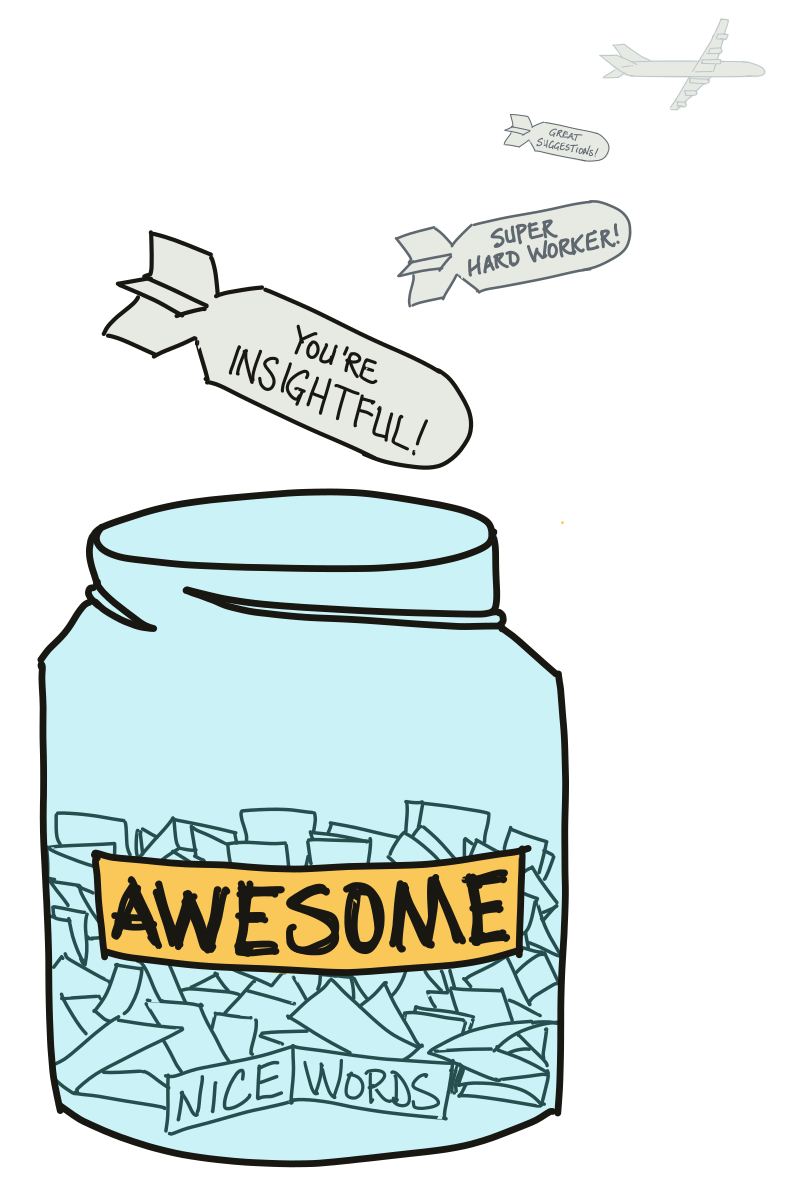
Some nice words were offhand comments, and while I may still discount a lot of compliments as general politeness, I do write down the things I find myself thinking about later. Fading memory doesn't mean the emotional boost of kind words also has to fade.
When I was a teenager, my father made me read Sean Covey's The 7 Habits of Highly Effective Teens, which used the metaphor of a relationship bank account: you have to make more deposits than withdrawals, and unlike an actual bank account, in relationships a deposit tends to evaporate and a withdrawal turns to stone. The same happens in our relationships with ourselves. For decades we remember an embarrassing moment, a typo in a tweet, a negative comment on a blog post, but we forget the compliments and nice words. Keeping a jar of awesome or a document of nice words is a way to combat that human weakness. Beyond that, documenting the positive things people say about you shows what others perceive to be your strengths, which can provide insight into how you can be your best self.
Sure there are bad days and low moods, but you are doing a good job!